
PFAS and babies: what Houston parents should know about drinking water
When you have a baby at home, water stops being just water.
I grew up in a clean water family, but having my first child completely changed the way I thought about water. It wasn’t just about keeping my skin smooth or my coffee tasting good… it became crucial that my child got the best ingredients in her body, especially water.
Water is used to mix formula, rinse bottles, cook food, bathe delicate skin, and support a developing immune system.
I’m not surprised this questions keeps coming up among my friends:
Should I be worried about PFAS in my baby’s drinking water?
Understanding what PFAS are, why babies are more vulnerable, and how families reduce exposure can help parents make informed, confident decisions.
We never want to create fear. We do want to bring clear education so you can make the best, most well educated decision for your family.
Let’s dive in!
What are PFAS and why are they called “forever chemicals”?
PFAS (per- and polyfluoroalkyl substances) are a large group of man-made chemicals used for decades in products that resist heat, oil, stains, and water.
They are often called “forever chemicals” because:
They do not break down easily in the environment
They persist in water, soil, and the human body
They can accumulate over time
PFAS enter water supplies through industrial discharge, firefighting foams, landfills, and wastewater runoff. Once present, they are difficult to remove using conventional water treatment.
Why babies are more vulnerable to PFAS exposure:
Babies are not just smaller adults. Their bodies are still developing, which makes them more sensitive to environmental exposures.
Health authorities note that PFAS exposure during infancy may be associated with:
Effects on immune system development
Reduced vaccine response
Hormonal and endocrine disruption
Developmental concerns with long-term exposure
Because babies consume more water relative to their body weight, especially when formula-fed, even low concentrations can matter over time.
How PFAS can enter a baby’s daily routine:
PFAS exposure doesn’t only come from drinking water. For infants, it can occur through:
Formula mixed with tap water
Bottles rinsed in tap water
Foods prepared with unfiltered water
Bath water absorbed through sensitive skin
Parents often assume boiling water makes it safer, but boiling does not remove PFAS. In fact, boiling can slightly concentrate them.
What Houston parents should know about local water:
Municipal water in Houston meets regulatory standards, but PFAS regulations are still evolving. Current limits are based on emerging science, and testing frequency varies by location.
That’s why many parents choose to:
Test their home’s water directly
Reduce exposure where possible
Focus on drinking and cooking water first
For families with infants, reducing PFAS exposure is often a precautionary choice, not a reaction to an immediate danger.
What actually removes PFAS from drinking water:
Not all filters remove PFAS.
The most effective household treatment options include:
Reverse osmosis (RO)
High-quality activated carbon systems designed for PFAS reduction
Reverse osmosis is considered one of the most reliable methods because it removes contaminants at the molecular level, including many PFAS compounds.
This is why RO is commonly recommended for:
Baby formula preparation
Drinking water
Cooking water
Why reverse osmosis is often chosen for families with babies:
Parents choose RO because it:
Reduces PFAS and other dissolved contaminants
Improves overall water purity
Provides consistent water quality for feeding and cooking
Offers peace of mind during early development stages
RO systems are typically installed at the kitchen sink, where drinking and formula water is used most.
Why Environmental ProTech
First and foremost, we are a family.
A family business, a family-centered community, on a family-driven mission.
We started this business 30+ years ago so families in our neighborhood could feel confident in the water they used for themselves, their children, their elderly, their pets, their loved ones.
When you work with us, it’s about creating confidence in the number 1 thing that goes into your and your family’s body every single day.
We are here to help Houston families understand what’s in their water and what steps make sense for their situation.
Our free water test helps identify:
Overall drinking water quality
Dissolved solids
Treatment options appropriate for families with infants
We explain results clearly and design systems based on your household’s needs, not fear or pressure.
As a parent, knowing my baby’s drinking water is properly treated provides reassurance during an already busy stage of life.
We want everyone to have that confidence.
What customers are saying…
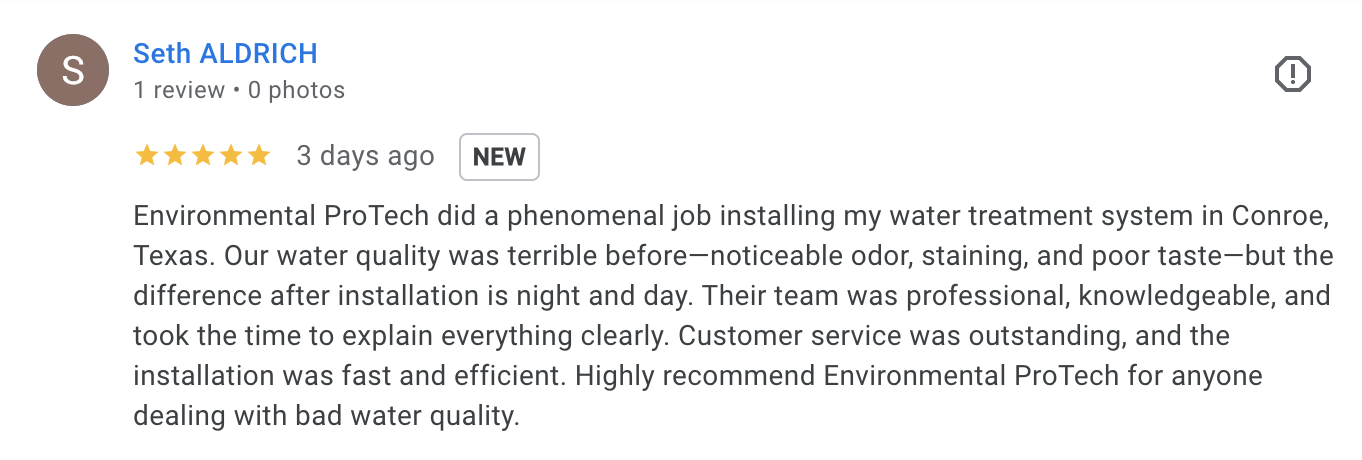
PS. We have over 30 years experience in bringing clean water to the Houston Homeowners. Our reviews speak for themselves! If you want clean drinking water from your faucet, contact us at 281-495-4420 to schedule your free water test today.
Sources
U.S. Environmental Protection Agency – PFAS and Drinking Water
https://www.epa.gov/pfasCenters for Disease Control and Prevention – PFAS Exposure and Health Effects
https://www.cdc.gov/pfasAgency for Toxic Substances and Disease Registry (ATSDR) – PFAS Information
https://www.atsdr.cdc.gov/pfasEnvironmental Working Group – PFAS and Children
https://www.ewg.org