
What is a berkey water system?
Understanding the real differences between Berkey gravity filters and R.O. and which one is better for Houston homes.
Berkey water filters became popular for their simplicity: a stainless-steel countertop unit, no electricity, gravity-driven filtration, and long-lasting filter elements. For many families, especially those focused on preparedness or off-grid living, Berkey feels like an appealing option.
But many Houston homeowners eventually ask:
“Is my Berkey enough — or should I switch to reverse osmosis?”
Here’s the honest, expert-backed comparison you’ve been looking for.
What Is a Berkey Water System?
A Berkey is a gravity-fed countertop filtration system.
Water is poured into the upper chamber, flows through filter elements, and collects in the lower chamber as “purified” water.
Berkey Filters Use:
Activated carbon
Ceramic elements
Proprietary media blends
Gravity pressure (no pump)
What Berkey Is Designed to Remove:
Chlorine
Some metals
Sediment
Some micro-organisms (depending on model)
Certain VOCs
Some pesticides
Berkey filters are not certified under NSF/ANSI standards, which is a major consideration for homeowners who want independently verified performance.
Why Berkey Users Switch to Reverse Osmosis
Houston water contains types of dissolved contaminants that gravity filters cannot remove, including:
Dissolved solids (TDS)
PFAS (“forever chemicals”)
Nitrates/nitrites
Heavy metals like arsenic and chromium
Fluoride (unless you buy separate add-on filters)
Chloramines (not just chlorine)
Dissolved minerals that affect taste
Gravity filters can improve flavor and reduce some chemicals, but they cannot purify water to the level Houston homeowners want.
For families on well water, Berkey units are not a suitable primary filtration method.
How Reverse Osmosis Works (and Why It’s Different)
Reverse osmosis uses pressure and a microscopic membrane to remove contaminants at the molecular level.
R.O. Removes:
PFAS
Fluoride
Arsenic
Chromium-6
Nitrates/nitrites
Sodium
Mineral hardness residue
Microplastics
Pesticides/herbicides
Dissolved metals
Industrial chemicals
Chloramine byproducts
It is one of the only home systems capable of achieving bottled-quality purity at the tap.
Which One Is Better for Houston Homes?
If your goal is simply to reduce chlorine taste, a Berkey can help.
But if your goal is to remove dissolved contaminants, the kind commonly found in Houston city water and wells, then reverse osmosis is hands-down the more effective and reliable choice.
Choose Berkey if:
You want a portable system
You prefer countertop, no-install filtration
You want emergency/off-grid prep
Choose Reverse Osmosis if:
You want the cleanest drinking water possible
You want to remove PFAS, fluoride, nitrates, metals, and dissolved solids
You live in Houston (chloramine-treated water)
You have a baby or immunocompromised family member
You want the best taste, clarity, and purity
You want purified water delivered to your faucet automatically
R.O. is the only option we recommend for drinking water purity.
Why Environmental ProTech
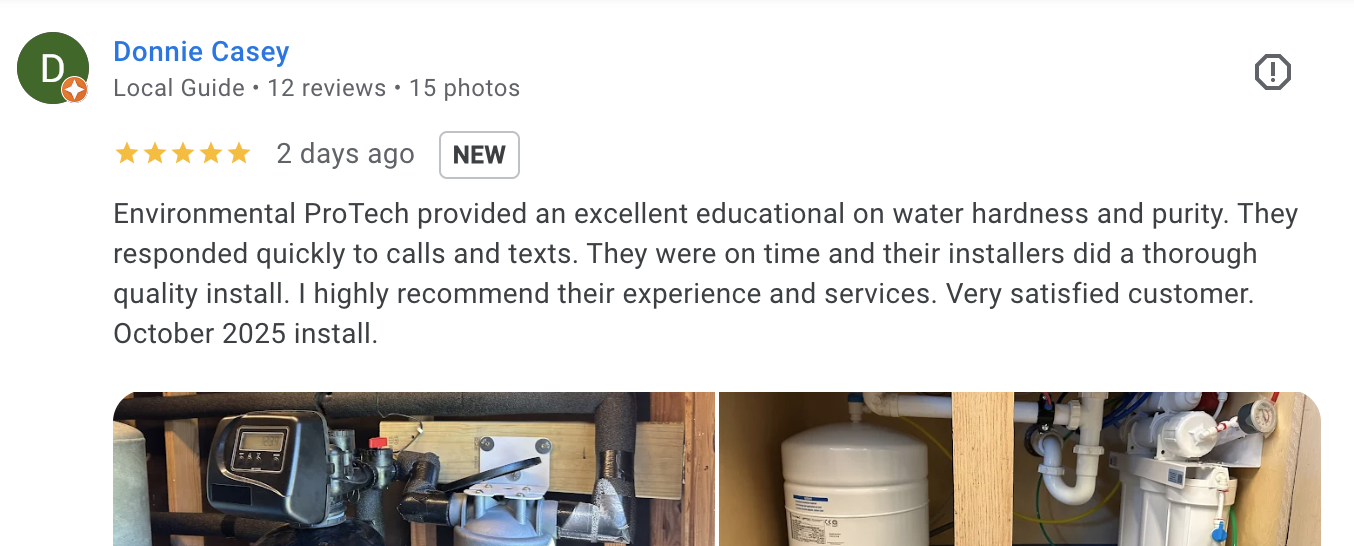
At Environmental ProTech, we’ve installed reverse osmosis systems across the Houston area for more than 30 years. We understand the city’s chloramine-treated water, the region’s dissolved solids, and the contaminants common in well systems. This is what our customers have to say…
Find out which system is right for you:
PS. We have over 30 years experience in bringing clean water to the Houston Homeowners. Our reviews speak for themselves! If you want clean drinking water from your faucet, contact us at 281-495-4420 to schedule your free water test today.
Sources & Further Reading
EPA – Drinking Water Treatment
https://www.epa.govCDC – Filtration vs. Purification Methods
https://www.cdc.govWater Quality Association – Reverse Osmosis Overview
https://www.wqa.orgNSF International – Drinking Water Standards
https://www.nsf.org