
Will A Water Softener Harm The Reverse Osmosis (R.O.)?
“If I have a water softener, will the softened water damage my reverse osmosis system?”
The answer is simple:
No — a water softener will not harm an R.O. system. It actually protects it and helps it perform better.
Here’s why these two systems work beautifully together and why most water professionals consider them the perfect pair for any home.
Soft Water Helps Reverse Osmosis Work More Efficiently
Reverse osmosis relies on a delicate membrane that can become clogged or fouled by hardness minerals. Softened water removes those minerals before they reach the R.O.
Soft Water Prevents:
Mineral scaling
Membrane fouling
Hardness buildup
Reduced water flow
Early membrane failure
Without a softener, hardness minerals (calcium + magnesium) crystalize on the R.O. membrane, reducing performance and dramatically shortening its lifespan.
Soft water keeps the membrane clean so it can function for years without issues.
Why R.O. Works Better With Soft Water
1. Longer Membrane Life
Soft water prevents scale buildup, allowing the R.O. membrane to last its full expected lifespan (2–5 years depending on use).
2. Higher R.O. Efficiency
Softened water flows more smoothly through the membrane, reducing backpressure and improving overall output.
3. Cleaner, Better-Tasting Water
Hardness can distort flavor and leave a mineral aftertaste.
Soft water improves the purity baseline before the R.O. finishes the job.
4. Lower Maintenance Costs
Without hardness buildup, you avoid:
Frequent membrane replacements
Costly descaling
Low-flow issues
Reduced R.O. lifespan
Soft water essentially works like a “pre-treatment system” for the R.O.
What Happens If You Run Hard Water Into R.O.?
If water is not softened first, you may experience:
Rapid membrane scaling
Frequent clogs
Slow R.O. output
Premature membrane replacement
Increased wastewater ratio
Shortened system life
Softening isn’t just beneficial — it’s the recommended setup for long-term R.O. health.
Do I Still Need an R.O. If I Have a Softener?
Yes. Water softeners and R.O. systems serve completely different functions.
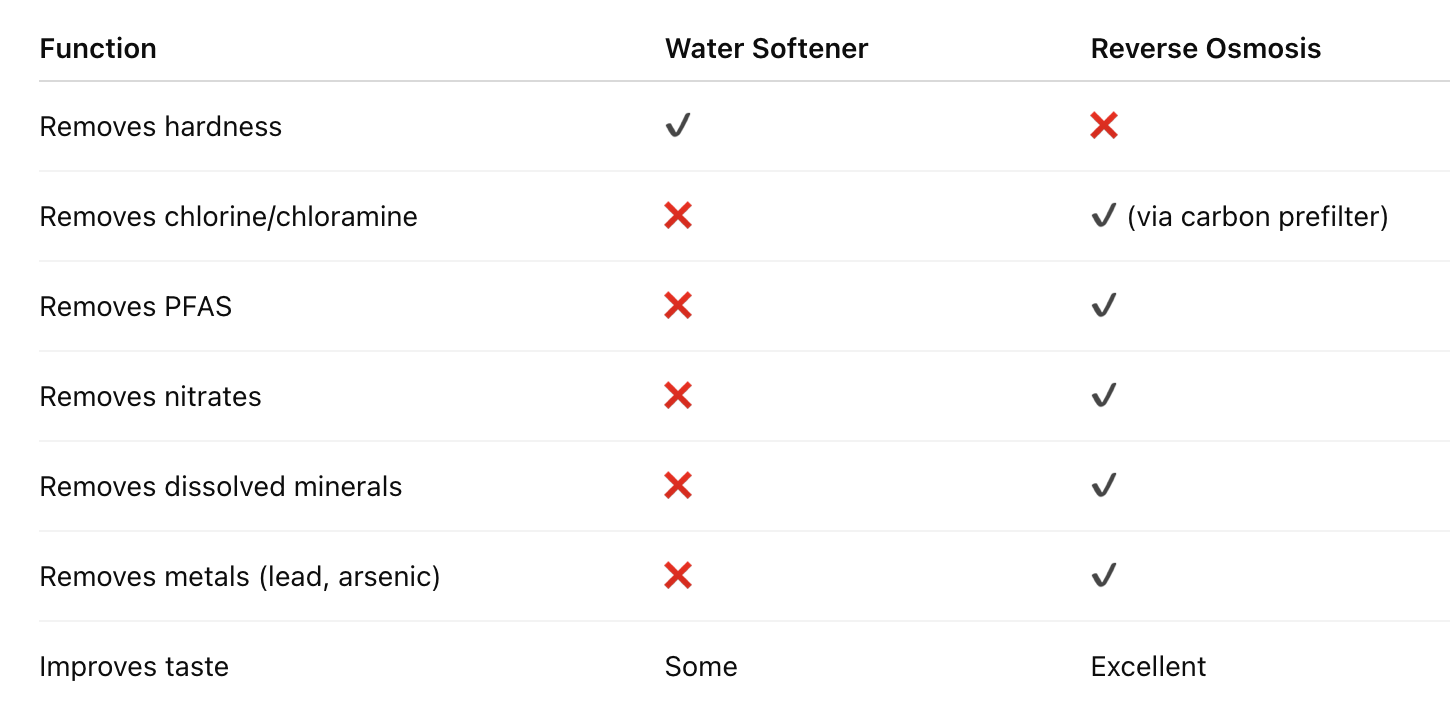
A softener protects your plumbing and appliances.
R.O. protects your drinking water.
Together, they give you the safest, cleanest, best-tasting water possible.
Why Houston Homes Benefit From Both
Houston water contains:
High hardness levels
Chloramines
Dissolved solids
PFAS in certain areas
Metals from aging infrastructure
A softener removes hardness.
R.O. removes dissolved contaminants.
One system cannot replace the other.
For the best water quality — especially for infants, cooking, ice, and drinking — both systems work as a complete, whole-home solution.
Why Environmental ProTech
Environmental ProTech has been installing softeners and reverse osmosis systems in Houston homes for over 30 years. We design your setup so both systems support one another, giving you:
High-efficiency performance
Long-term reliability
Maximum purity
Perfect flow and pressure
Professional installation and tuning
With our approach, your R.O. system lasts longer, your softener performs better, and your water tastes incredible.
Find out which system is right for you!
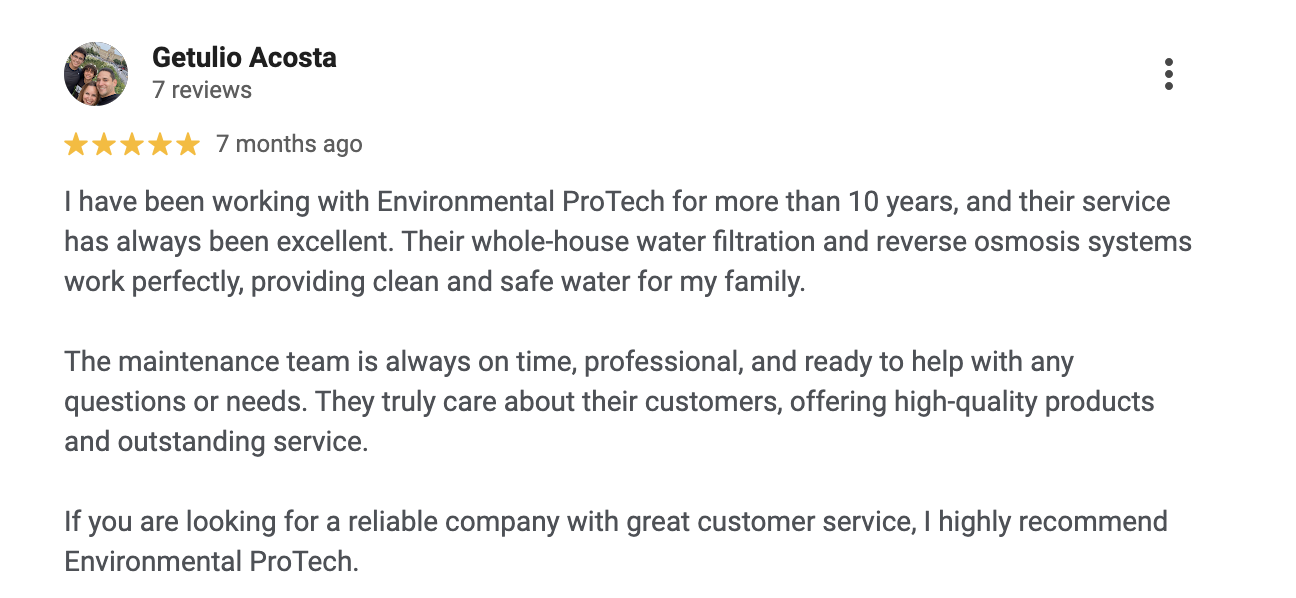
PS. We have over 30 years experience in bringing clean water to the Houston Homeowners. Our reviews speak for themselves! If you want clean drinking water from your faucet, contact us at 281-495-4420 to schedule your free water test today.
Sources & Further Reading
Water Quality Association – Reverse Osmosis & Membrane Scaling
https://www.wqa.orgU.S. Geological Survey – Hard Water Mineral Effects
https://www.usgs.govCDC – Home Water Treatment Basics
https://www.cdc.govEPA – Water Hardness and Treatment
https://www.epa.gov